KEYNOTE SPEAKER I

Prof. Hamid Reza Karimi
MAE, IIAV Fellow, ISCM Fellow, AAIA Fellow, IEEE Senior Member
Milan Polytechnic University, Italy
Hamid Reza Karimi is a Professor of Applied Mechanics in the Department of
Mechanical Engineering at Politecnico di Milano, Milan, Italy. Prof. Karimi’s original research and
development achievements span a broad spectrum within the topic of automation/control systems, and
intelligence systems with applications to complex systems such as vehicles, robotics and
mechatronics. Prof. Karimi is an ordinary Member of Academia Europaea (MAE), Member of European
Academy of Sciences and Arts (EASA), Member of The European Academy of Sciences (MEurASc), Member
of Agder Academy of Science and Letters in Norway, Member of National Academy of Artificial
Intelligence (NAAI), Honorary Academic Member of National Academy of Sciences of Bolivia,
Distinguished Fellow of the International Institute of Acoustics and Vibration (IIAV), Fellow of
The International Society for Condition Monitoring (ISCM), Fellow of the Asia-Pacific Artificial
Intelligence Association (AAIA), and also a member of the IFAC Technical Committee on Mechatronic
Systems, the IFAC Technical Committee on Robust Control, the IFAC Technical Committee on Automotive
Control, member of the board of Directors of The International Institute of Acoustics and Vibration
(IIAV) and member of Management Committee of The International Society for Condition Monitoring
(ISCM). Prof. Karimi is the recipient of the 2025 NAAI Distinguished Artificial Intelligence
Scholar Award, the 2021 BINDT CM Innovation Award, the Web of Science Highly Cited Researcher in
Engineering, August-Wilhelm-Scheer Visiting Professorship Award, JSPS (Japan Society for the
Promotion of Science) Research Award, and Alexander-von-Humboldt-Stiftung research Award, for
instance. Prof. Karimi serves/served as Editor-in-Chief and Book Series Editor for Springer, CRC
Press and Elsevier. He has also participated as General Chair, keynote/plenary speaker,
distinguished speaker or program chair for several international conferences in the areas of
Control Systems, Robotics and Mechatronics. Prof. Karimi has served as vice-president for
International Prize "Lombardia è ricerca" and is also the conference chair for the 2026 World
Congress on Condition Monitoring (WCCM2026) to be held in Milan, Italy. Additionally, he is an
Honorary Visiting Professor in the School of Computing & Engineering at the University of
Huddersfield, UK.
Speech Title: Data-Driven Approaches to Active Noise Control Systems
Abstract: Active noise control (ANC) systems often operate in environments containing both
deterministic and broadband noise, where traditional methods are limited by the need for prior
acoustic measurements. This talk presents data-driven approaches using deep learning to predict
acoustic pressure and capture spatial patterns in sound fields. It further explores the potential
of intelligent ANC systems to address nonlinearities in electro-acoustic environments and improve
broadband noise suppression. A direct control design framework based on near-field acoustic
holography is introduced, enabling controller development without requiring detailed system models.
The presentation concludes with practical insights into implementing effective ANC strategies for
reducing noise transmission through encapsulated structures.
KEYNOTE SPEAKER II
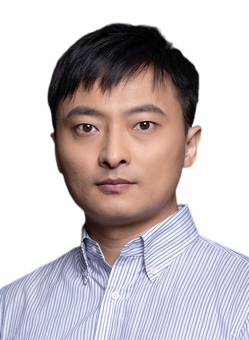
Prof. Huawei Huang
IEEE Senior Member
Sun Yat-sen University, China
Huawei Huang is a Professor at the School of Software Engineering and a jointly appointed
Professor at Lingnan College, Sun Yat-sen University. He is a recipient of the Guangdong
Provincial Distinguished Young Scholars Fund and has been listed among the World’s Top 2%
Scientists annually since 2021. His research interests include high-performance blockchain
systems and protocols, blockchain-based financial protocols, trustworthy infrastructure for AI
agents, and distributed computing and networking. His work has been published in CCF-A journals
such as ToN, JSAC, TPDS, TSC, TDSC, TIFS, TMC, and TC, as well as CCF-A international
conferences including WWW and INFOCOM. He has served as chair for more than ten forums,
symposia, and workshops at academic conferences in China and abroad. He has led more than ten
research projects, including a project under the National Key R&D Program of China, two General
Program projects funded by the National Natural Science Foundation of China (NSFC), and the
Guangdong Provincial Distinguished Young Scholars Program. He has published five English
academic monographs, textbooks, and popular science books on blockchain. He led his team to
develop and open-source the blockchain experimental platform BlockEmulator, which provides
mature experimental methods, tools, and open-source code for blockchain researchers and has
served researchers from nearly 100 countries and regions. He also led the development and
launch of the academic version of the Blockchain “BrokerChain Testnet”.
Speech Title: AgentEmulator: A Blockchain-Empowered Testbed for Trustworthy AI Agent
Infrastructure
Abstract: AI agents are evolving from chatbots into autonomous digital workers. But when
they act, pay, and collaborate on their own, how can we know what they did, who is responsible,
and whether their interactions are trustworthy? Blockchain acts as a shared, tamper-resistant
ledger that can provide such trust. This talk introduces AgentEmulator, a blockchain-empowered
testbed for trustworthy AI agent infrastructure, developed by Prof. Huang’s Research Group at
Sun Yat-sen University (a.k.a. HuangLab). Built on the blockchain simulation tool
BlockEmulator-X, AgentEmulator v1.0 lets researchers describe agent actions such as joining,
paying, and leaving in a simple file. The system automatically turns these actions into
on-chain transactions, records the results, and generates Agent’s account balance charts and
visual reports. Under the same settings, experiments can be reproduced. AgentEmulator aims to
be a practical sandbox for studying identity, auditing, payment, and collaboration mechanisms
for future trustworthy AI agents.
KEYNOTE SPEAKER III
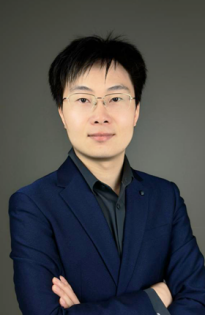
Prof. Lidong Yang
IEEE Member
The Hong Kong Polytechnic University, China
Lidong Yang is an Assistant Professor and PhD supervisor in the Department of Industrial and
Systems Engineering at The Hong Kong Polytechnic University. He is a member of the Academic
Committee of the PolyU-Peking University Third Hospital Joint Laboratory for
Medical-Engineering Collaborative Innovation. His research focuses on microrobotics and
systems. He received the 2026 PolyU Young Innovative Researcher Award, the 2025 Machines Young
Investigator Award, the 2022 Hong Kong Young Scientist Award (Finalist), and the 2021 Chinese
Association of Automation Outstanding Doctoral Dissertation Nomination Award. His research also
received multiple Best Paper Awards at international conferences on robotics and automation. He
has (co-)led projects funded by the NSFC, Hong Kong RGC, ang Guangdong Basic and Applied Basic
Research Foundation. He serves as Associate Editor of IEEE Transactions on Robotics, Executive
Editor-in-Chief of Advanced Clinical Engineering, Associate Editor of Robot Learning, and Youth
Editor of SmartBot.
Speech Title: Machine learning for microrobot autonomy
Abstract: Microrobot technology has advanced rapidly, as its application scenarios
expand, including targeted therapy and micro/nano manipulation. Traditional control methods,
however, rely heavily on accurate physical models and manual parameter tuning. Under the
microscale conditions imposed by Brownian motion, multiphysics coupling, and strong external
disturbances, they suffer from limited accuracy in modeling, poor robustness, and weak
adaptability. Machine learning techniques, with reinforcement learning as an example, offer a
new technical pathway for overcoming these bottlenecks, thanks to their strong nonlinear
mapping, self-learning, and environment-interaction capabilities. This talk first examines the
paradigm shift that AI is bringing to robot control and analyzes the distinctive challenges
that microrobot control faces in microscale environments. On this basis, I present our
representative work on microrobot control, spanning both classical control methods and recent
learning-based control approaches. Looking ahead, I will discuss future directions for
learning-based control of microrobots.
TBA...